"I was 27 and 420 pounds, and my life was half over if I didn't make a change."
That's how Coach Charlie describes 2015. His youngest was two. He was still playing hockey and baseball, but every game was a grind. Some mornings his feet and ankles hurt so much he was "almost having to crawl to the bathroom."
Today Charlie is a personal trainer at Jolt Fitness. He trains at least three times a week, walks 10,000 steps every day, and can bike around town for hours with his nephews. He'll be the first to tell you he isn't special.
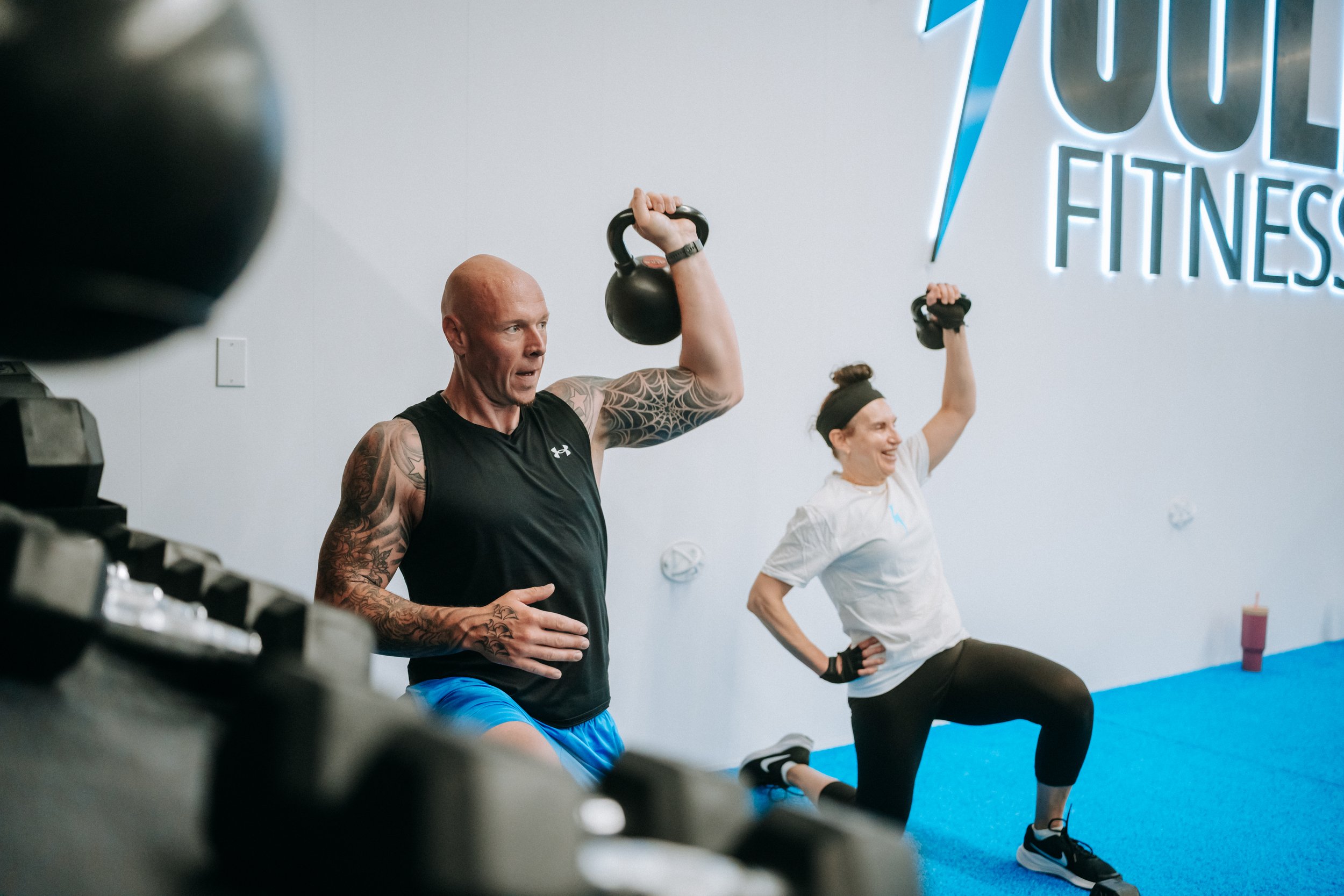
"There's nothing special about me. I just did it. Anybody can do it." This is his story: what worked, what didn't, what the research says about it, and why it makes him such a good coach for anyone who's ready to start.
WHERE CHARLIE STARTED

Charlie around the time he decided to make a change.
Charlie spent more than a decade overweight, starting in high school. By 2015, it showed up in every part of his day.
Food: "I ate everything that is not good. A bag of chips every day." Healthy options weren't even on his radar.
Energy: At work he'd sit down between tasks just to get through the shift.
Pain: Back, legs, ankles and feet. "It was a grind to get through a baseball game."
Mindset: "Everything is so much harder. It's a defeated feeling, nonstop."
There were wake-up calls along the way. When Charlie bought his first house, he went through a life insurance assessment. He was approved, but his agent told him he'd never seen someone with that many risk factors get approved. Charlie calls it "one of several" moments that told him something had to give.
He didn't lack the desire to change. "I wanted to change. I just wasn't doing what I needed to do."
What finally moved him was the weight of all of it together: the pain, the exhaustion, and his kids. "It was such a drain being that unhealthy. You're tired all the time, in pain and feel miserable."
Lesson 1: The first change can be small
Charlie didn't start with a gym membership or a strict diet. He started by eating less junk food. That's it.
"The smallest change made a big difference, and then things started to click from there. Once you see that it's possible, you realize you can do it. Everybody can do it. You just have to get started somewhere."
Each change made the next one easier. "Little bits of more and more change, and everything gets easier, and then it's easier to adjust, because you're accustomed to making changes."
Try this:
Pick one change you could keep up during your busiest week.
Give it two months before you decide whether it's working.
Treat a missed day as a missed day, not a reason to quit.
Lesson 2: Track it so you can see it
Once he had some momentum, Charlie picked up a Fitbit. It turned his effort into something he could see.
"It gives you visual evidence. And then it just becomes a math equation." He logged his food every day for about a year and steadily lost close to two pounds a week for a long stretch. Over roughly five to six years, he went from 420 pounds to about 235, a 185-pound change.
He also got serious about steps. Years later, he still hits 10,000 a day without fail. "I'll never stray from that, because that is what got the ball rolling." Some days that meant pacing back and forth at work. "Everyone thought I was insane. Then eventually, oh wait. Charlie's just getting steps in."
What the research says:
Self-monitoring works. A systematic review of 22 studies found a consistent link between tracking food, activity or body weight and better results in behavioural weight-management programs. The authors noted that the quality of the evidence was limited by study design (Burke et al., 2011).
Steps add up. A 2022 meta-analysis of 15 international groups of adults found that more daily steps were linked with a steadily lower risk of death from any cause. For adults under 60, the benefit kept building up to roughly 8,000 to 10,000 steps a day. For adults 60 and older, it levelled off around 6,000 to 8,000 (Paluch et al., 2022).
Try this: Wear a step counter for one week without changing anything. Just look. Then nudge your daily number up a little at a time.
Lesson 3: Progress beats perfection, especially with food
Charlie is honest that his eating style wasn't textbook perfect. He leaned on simple meals he liked, such as chicken, rice, steak and caesar salad, and lots of protein.
"When you have hundreds of pounds to lose, you're not necessarily looking for the perfect, optimal healthy diet. You're looking for what gets your calories down."
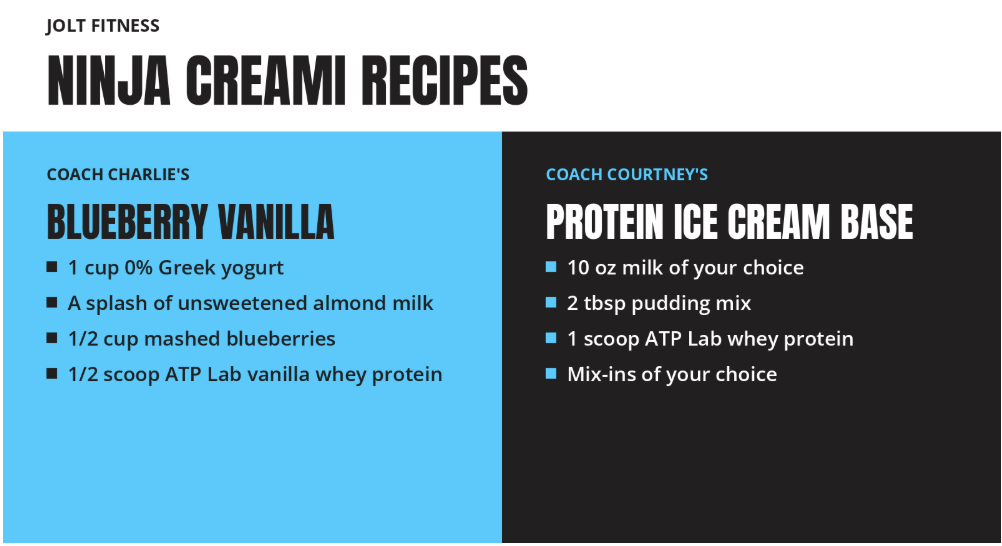
He still deals with cravings. "I get hungry every evening, no matter what." His fix is planning for it. He uses a Ninja Creami to turn a protein shake into ice cream, which he calls "a godsend." "Now I can eat ice cream every night. It's just another protein shake." He keeps other high-protein snacks around too, so evening hunger doesn't turn into the old bag of chips. Every Sunday he preps five lunches, plus as many dinners as his week needs.
Compare that to his Sundays in 2015. "It would be on the couch."
What the research says: Protein supports the work you do in the gym. A meta-analysis of 49 trials with 1,863 participants found that adding protein during resistance training produced modest but real gains in strength and muscle. (Morton et al., 2018).
Your needs depend on your body, your training and your health history. That's what our nutrition coaching is for.
Lesson 4: Smaller isn't the same as stronger
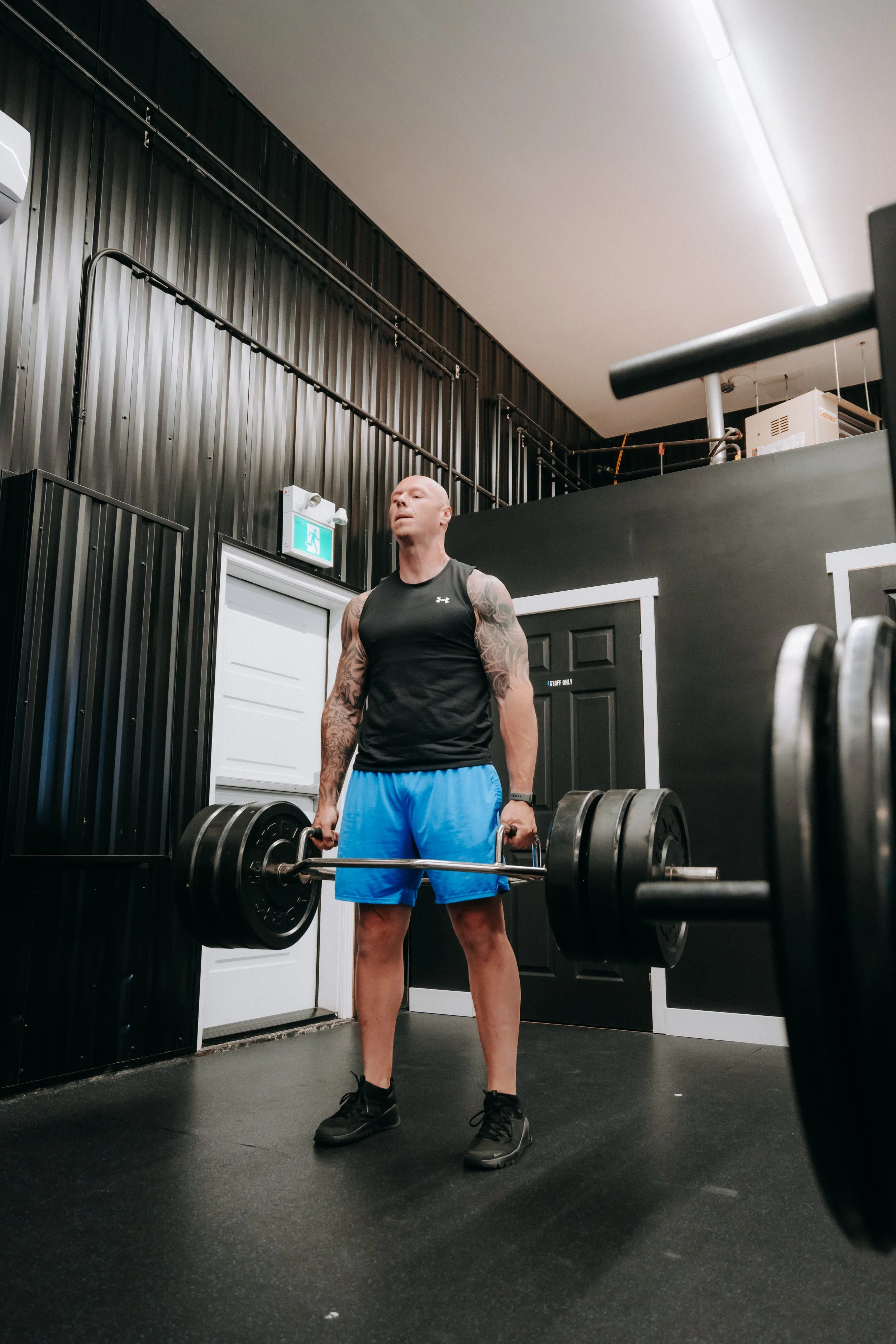
By the time the pandemic hit, Charlie had changed his body through walking and eating alone. He'd just started going to a gym in town when everything shut down.
A friend lent him a couple sets of dumbbells. "I walked all day and did curls in my living room with a 40-pound dumbbell."
But when he looked in the mirror, something was missing. "Deflated is the best way to describe it." He was about 235 pounds by then, but he didn't feel strong, and walking alone had stopped moving him forward."
So strength became the next goal.
What the research says:
Diet alone costs muscle. A review in Advances in Nutrition found that reducing body weight through diet [or weight loss drugs] alone means losing muscle along with fat. Resistance training helps keep that muscle and also builds strength (Cava et al., 2017).
Strength pays off long term. A meta-analysis of 16 studies found that adults who did muscle-strengthening activities had a 10 to 17 percent lower risk of death from any cause, heart disease, cancer and diabetes. (Momma et al., 2022).
You don't need hours in the gym. Two or three well-planned sessions a week can get you there.
Lesson 5: You don't have to do it alone
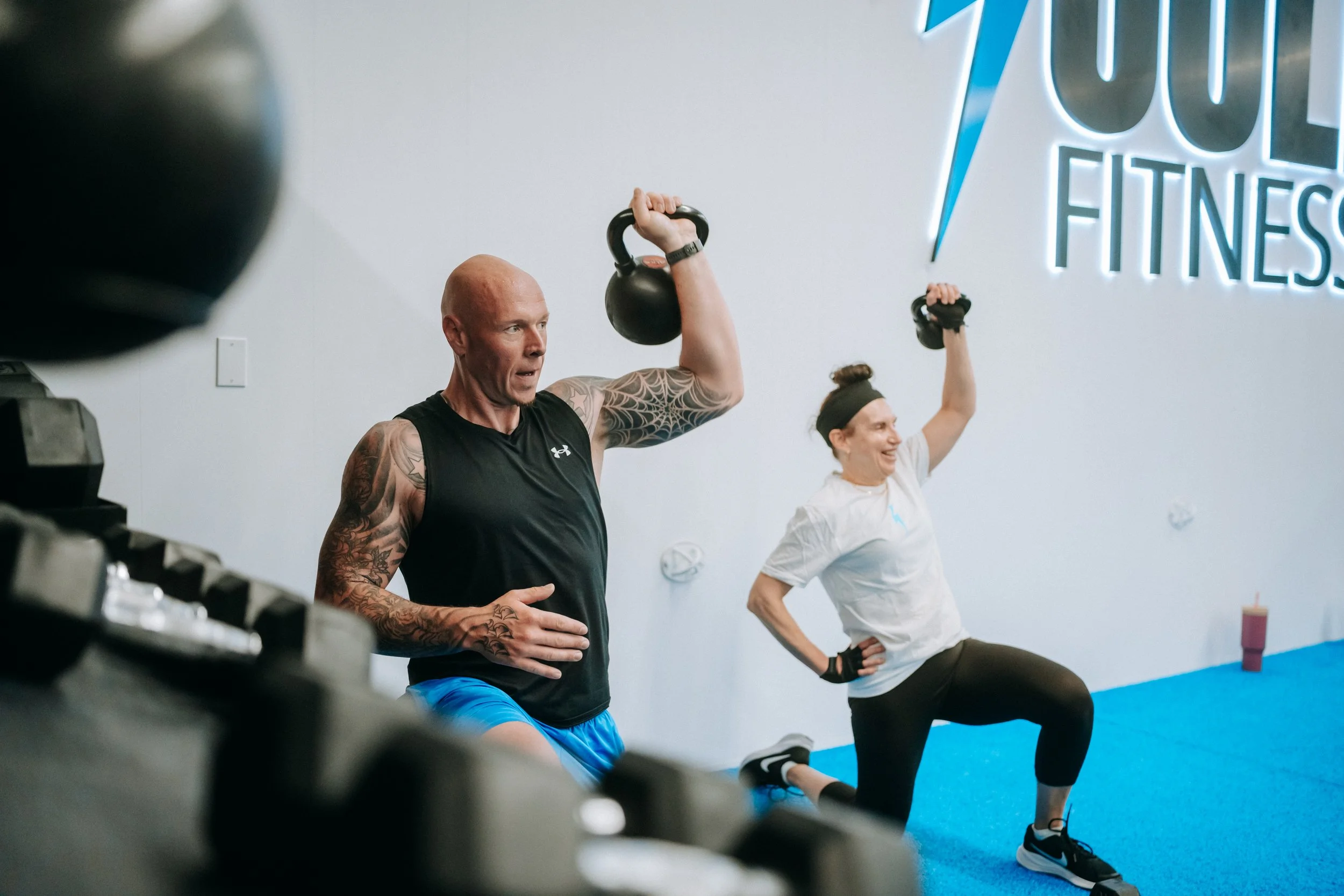
For years, Charlie trained by himself, and his programming stayed the same. "I would do the same six things and slowly add weight, five pounds a week or whatever, and I never changed anything."
When he joined Jolt, he wasn't sure group training was for him. "I never thought that classes would be for me. I like to just do my own thing."
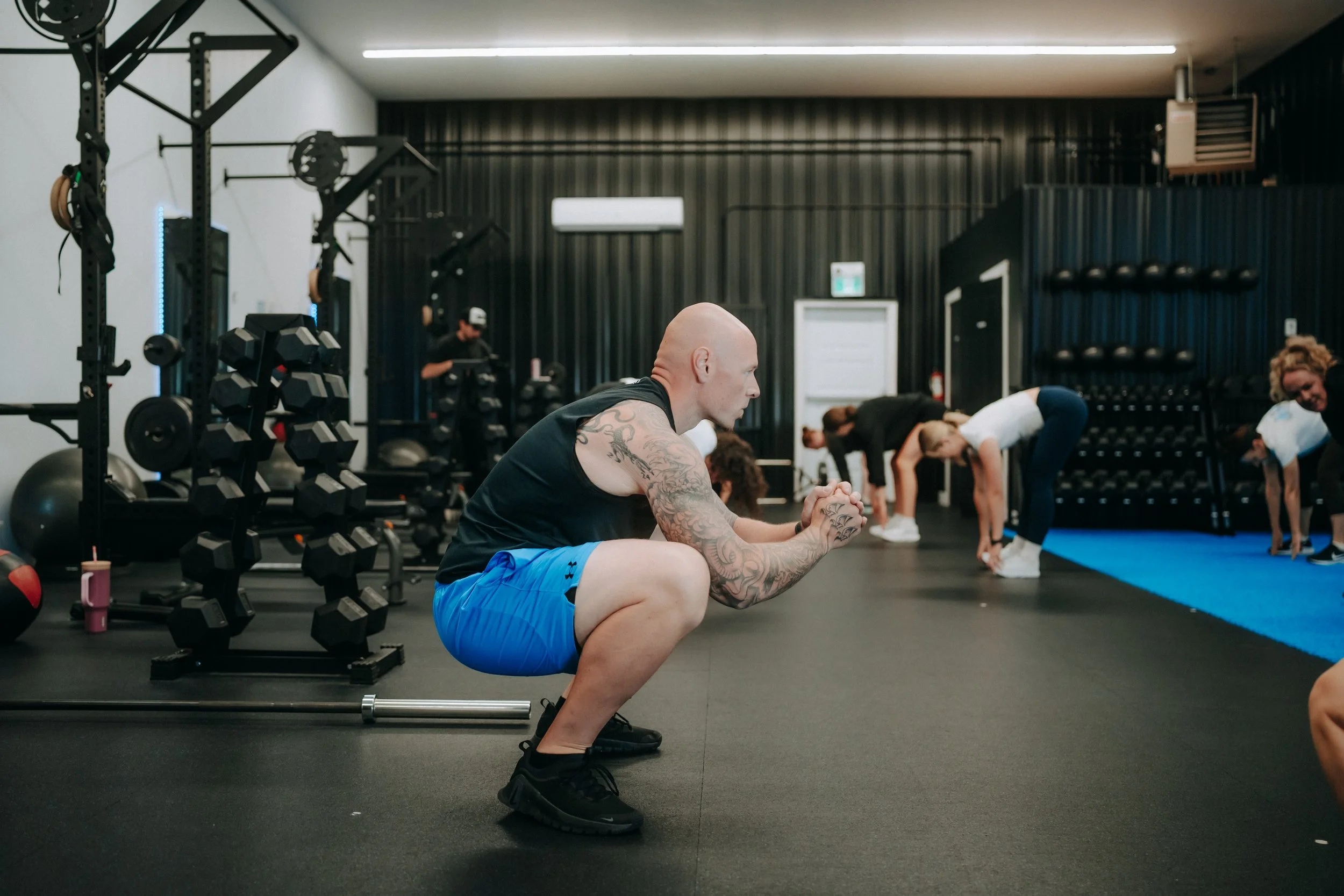
His workouts got better too. "They're far more balanced and professionally structured" The biggest improvement was mobility, which he calls "a thousand percent" better. "I noticed today when we were doing squats in the warm-up. I was way down." Pain is much less of a factor in his life now. "I don't have much pain, unless I hurt myself."
What the research says:
Coaching raises the bar. In a study of 46 with lifting experience, those who trained with a personal trainer chose heavier weights on their own (about 51 percent of their max on average, versus 42 percent) and were stronger overall than those who trained without one (Ratamess et al., 2008).
Community keeps you going. A meta-analysis of 44 studies found that exercising in a close-knit group that uses team-building strategies worked better than any regular exercising at home alone (Burke et al., 2006).
How Charlie's story shapes the way he coaches
Charlie made the switch from his old job to coaching because he wanted work he loved. "My old job, I didn't really like it. It was just a job." Now he spends his days helping people do what he did.
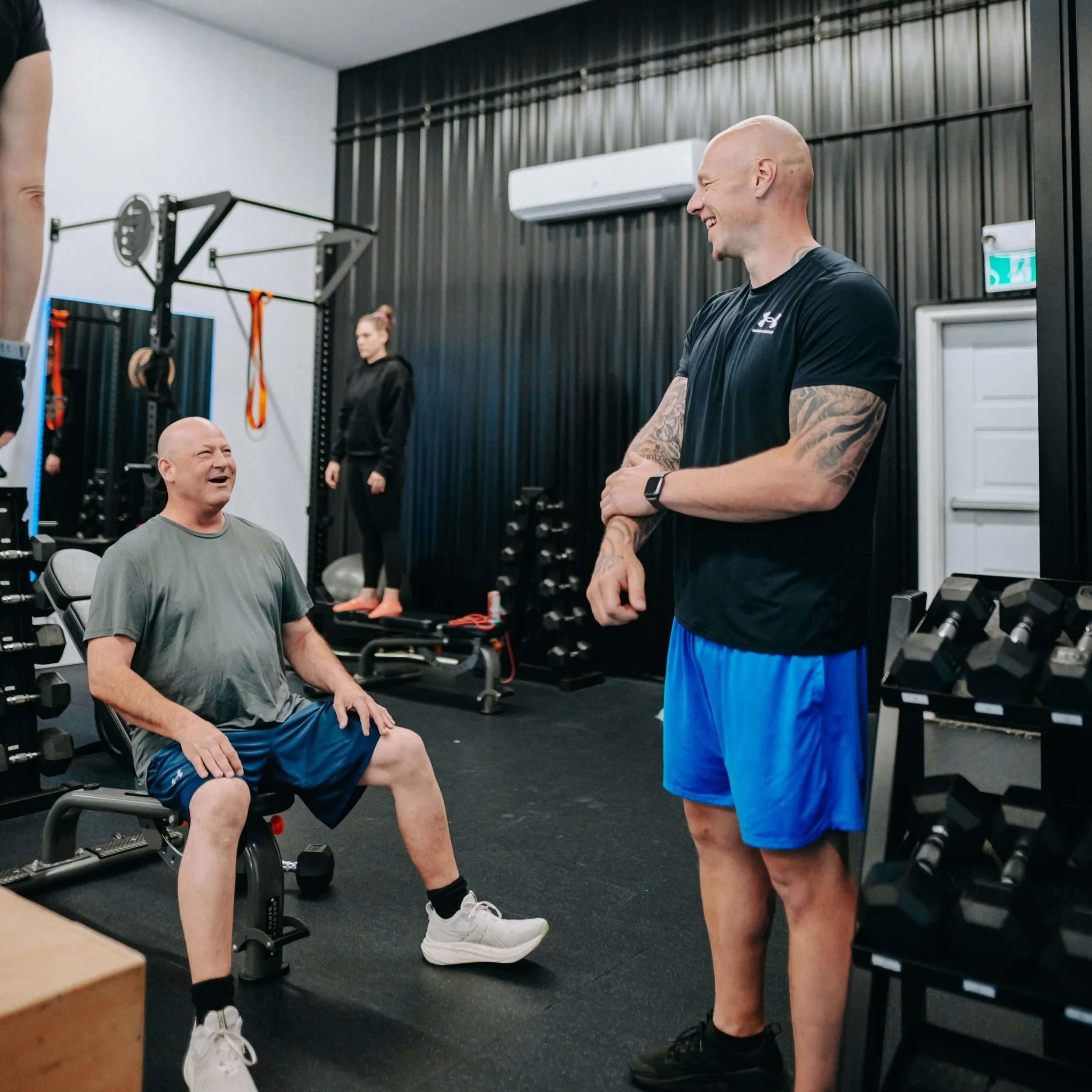
He knows you're stronger than you think. "Most people are a lot stronger than they think they are." He's watched people walk in and grab the 10-pound dumbbells, and he knows they'd stay there forever on their own. His job is to show them what else is possible.
He builds habits that last. "The best diet, the best training plan, the best anything is the one that you stick to." He and Coach Siggy compare it to brushing your teeth: "Would you rather brush your teeth a little bit each day, or brush them hard for 30 days and then not for the rest of the year?"
He plays the long game. "Once you realize that you’re going to eat healthy and work out forever, that kind of eliminates a timeline." Short-term goals are fun, but his big goal is simple: "I want to play golf when I'm 80."
He knows what holds people back. "They expect it to happen too fast. It's not going to. Small changes over time is big change."
He loves the breakthroughs. "It's nice watching people realize that they can do hard things."The first time a client hits a new lift, he says, "the look on their face is incredible."
He coaches everyone. "If you would have asked me before I started, I would have said I train guys like me. But I don't really have a preference. It's nice to have the full range, as long as people are willing to commit to following the plan and have a growth mindset."
Life outside the gym
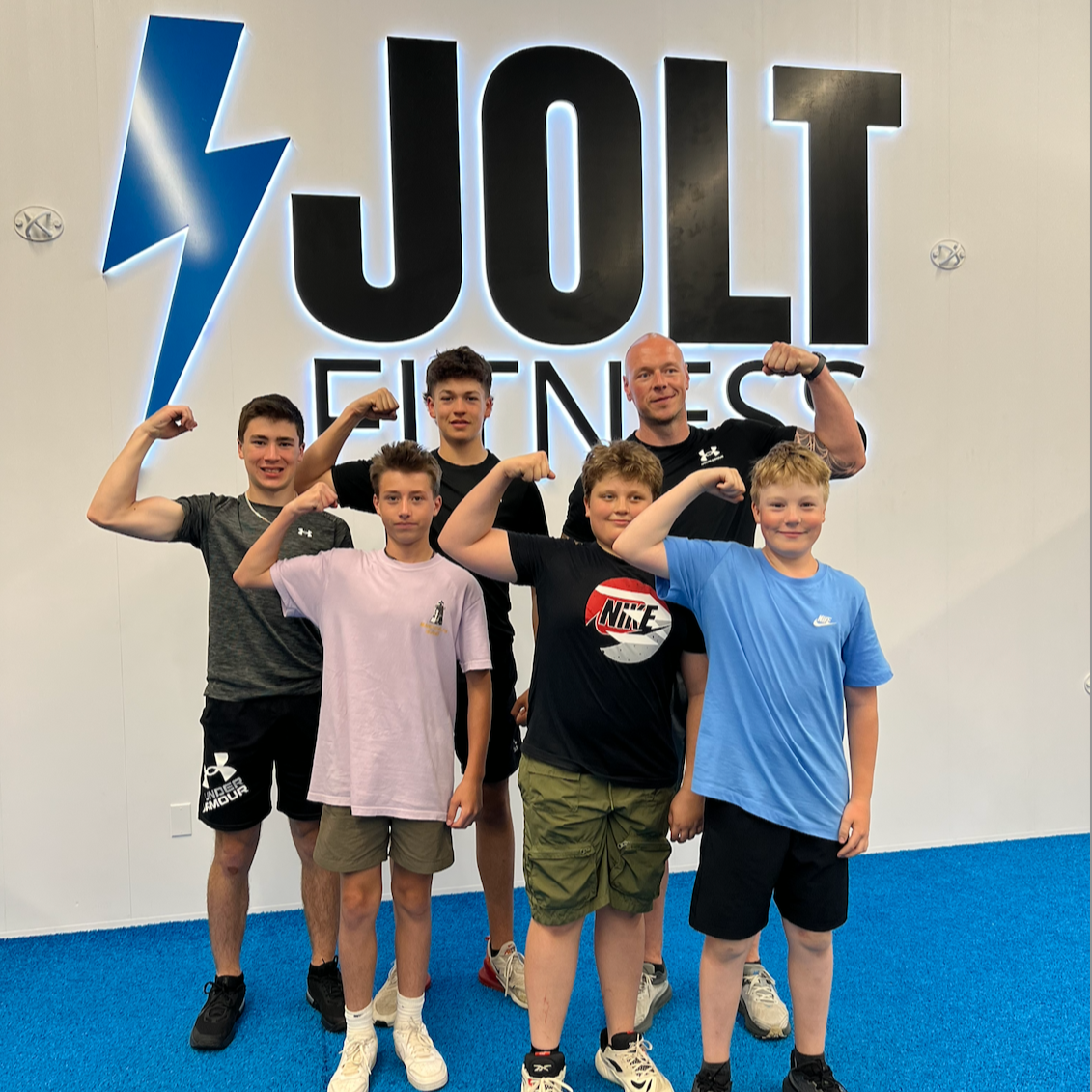
The changes go well past the gym.
Back behind the bench. This version of Charlie coached his daughters' hockey. Back in 2015, even playing hockey meant his feet hurt the entire time.
Energy for family. His daughters are teenagers now, and he has more energy for them than he ever did. He’s proud that he can lead by example with them. With his nephews, "absolute balls of energy and chaos," he says, "I can keep up with them no problem. We can bike around town for hours on end."
Being a role model. He hopes his story inspires his family and the people who count on him.
Accepting a compliment. For years, praise was hard to hear. "It took a long time for me to accept the compliment, because I knew I still had so much more work to do." Not anymore. "I'm comfortable with compliments now, because I'm happy where I'm at now, whereas before I wasn't."
Why train with Coach Charlie
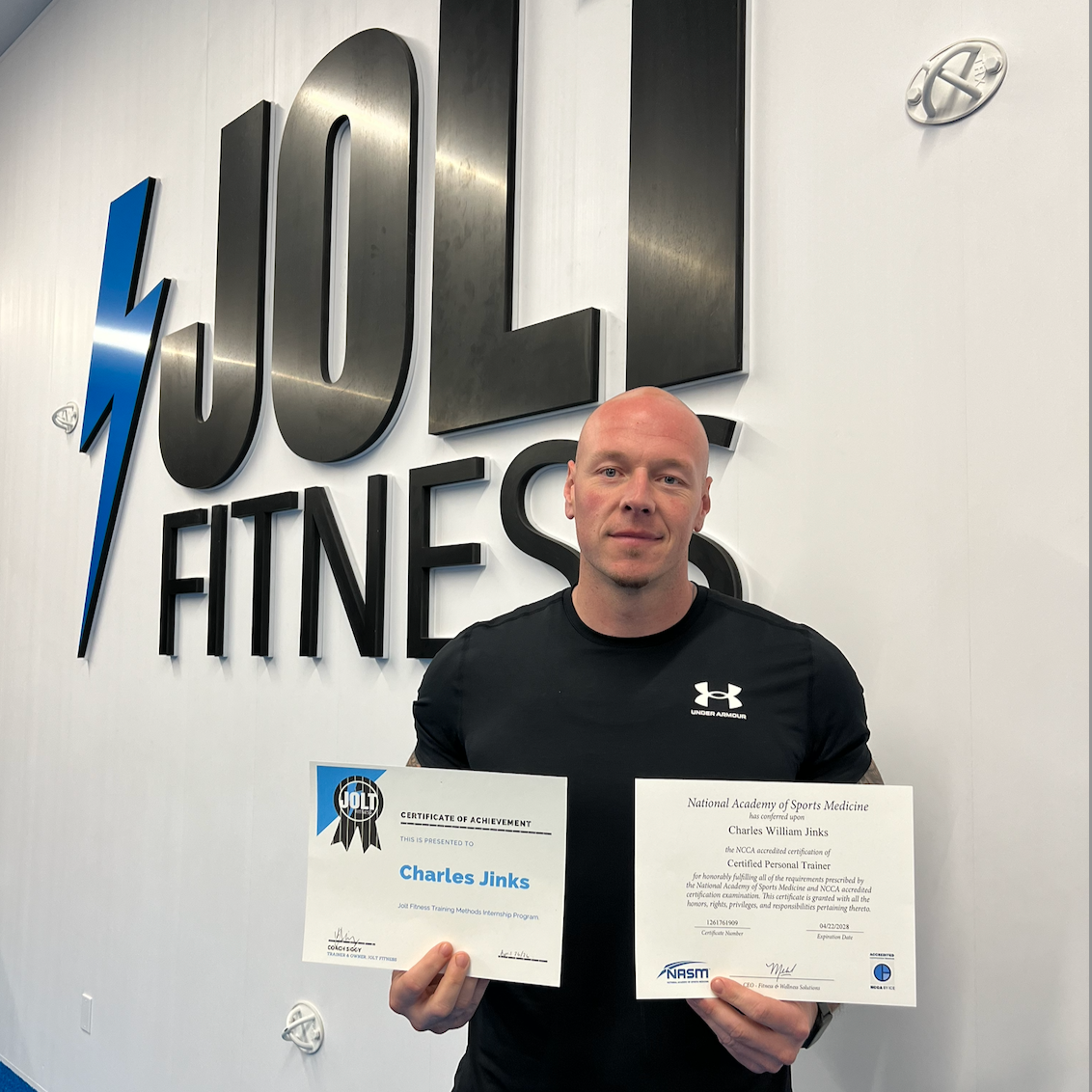
If you've been putting it off because you're not sure where to start, Charlie is the coach who's been exactly where you are. He's also a NASM Certified Personal Trainer (an NCCA-accredited certification) and a graduate of the Jolt Fitness Training Methods Internship Program.
He's lived the hard part. Pain, low energy, the defeated feeling, starting over. He won't judge where you're starting, and he won't rush you past it.
He knows how real change happens. Small habits, stacked over time, until they stick. He'll build your plan around your life, not the other way around.
He'll push you past the 10-pound dumbbells. He's seen what happens when people train on their own and plateau, because it happened to him. He'll show you what you're capable of.
He trains for real life. Strength, mobility and energy to keep up with your kids, your work and whatever comes next.
He's welcoming to everyone. First-timer, nervous about the gym, back after years away, or someone who thinks they already have it figured out. That last one was Charlie, too.
Charlie is a great fit if you:
Have started over more times than you can count and want this time to stick
Deal with pain or stiffness that gets in the way of everyday life, and want to move better
Have been training alone and stopped seeing progress
Feel nervous walking into a gym for the first time
Want a coach who gets it because he's lived it
Train with Charlie at Jolt
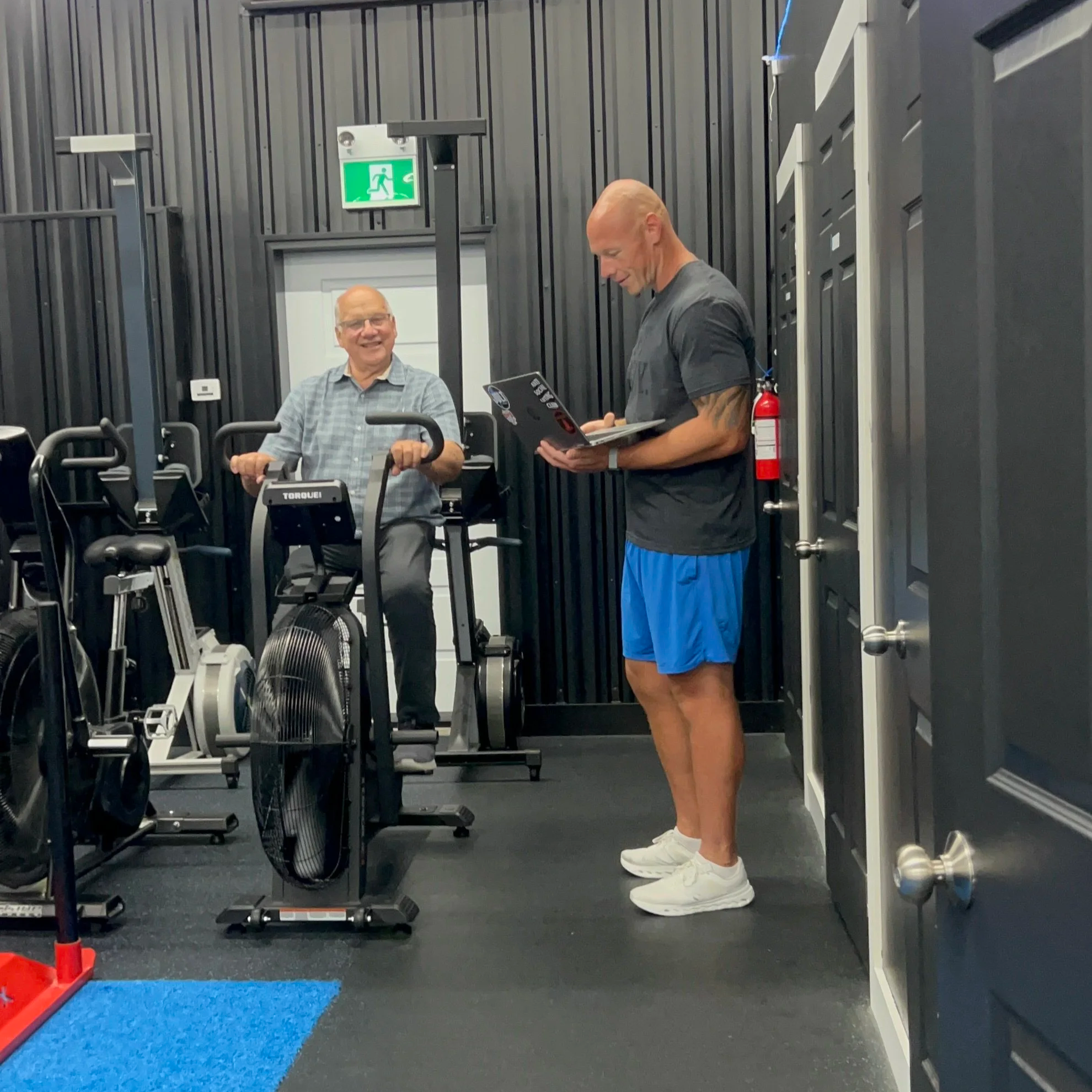
Ask Charlie what he'd tell his 2015 self, and he doesn't hesitate. "Just start."
Here's how to start training with him:
Book a free movement analysis and tell us you'd like to work with Charlie.
Meet Charlie. He'll look at how you move and talk through your goals, schedule and history.
Get a plan built for you, with personal training and nutrition coaching to back it up.
Take the first step. Then the next one.
Book your free movement analysis and request Coach Charlie
Jolt Fitness is five minutes south of Exeter on Highway 4, coaching people from Exeter, Hensall, Zurich, Lucan, Grand Bend and across South Huron.
-Coach Siggy + Charlie
REFERENCES
Burke, L. E., Wang, J., & Sevick, M. A. (2011). Self-monitoring in weight loss: A systematic review of the literature. Journal of the American Dietetic Association, 111(1), 92–102. https://doi.org/10.1016/j.jada.2010.10.008
Burke, S. M., Carron, A. V., Eys, M. A., Ntoumanis, N., & Estabrooks, P. A. (2006). Group versus individual approach? A meta-analysis of the effectiveness of interventions to promote physical activity. Sport & Exercise Psychology Review, 2(1), 19–35.
Cava, E., Yeat, N. C., & Mittendorfer, B. (2017). Preserving healthy muscle during weight loss. Advances in Nutrition, 8(3), 511–519. https://doi.org/10.3945/an.116.014506
Lally, P., van Jaarsveld, C. H. M., Potts, H. W. W., & Wardle, J. (2010). How are habits formed: Modelling habit formation in the real world. European Journal of Social Psychology, 40(6), 998–1009. https://doi.org/10.1002/ejsp.674
Momma, H., Kawakami, R., Honda, T., & Sawada, S. S. (2022). Muscle-strengthening activities are associated with lower risk and mortality in major non-communicable diseases: A systematic review and meta-analysis of cohort studies. British Journal of Sports Medicine, 56(13), 755–763. https://doi.org/10.1136/bjsports-2021-105061
Morton, R. W., Murphy, K. T., McKellar, S. R., Schoenfeld, B. J., Henselmans, M., Helms, E., Aragon, A. A., Devries, M. C., Banfield, L., Krieger, J. W., & Phillips, S. M. (2018). A systematic review, meta-analysis and meta-regression of the effect of protein supplementation on resistance training-induced gains in muscle mass and strength in healthy adults. British Journal of Sports Medicine, 52(6), 376–384. https://doi.org/10.1136/bjsports-2017-097608
Paluch, A. E., Bajpai, S., Bassett, D. R., et al. (2022). Daily steps and all-cause mortality: A meta-analysis of 15 international cohorts. The Lancet Public Health, 7(3), e219–e228. https://doi.org/10.1016/S2468-2667(21)00302-9
Ratamess, N. A., Faigenbaum, A. D., Hoffman, J. R., & Kang, J. (2008). Self-selected resistance training intensity in healthy women: The influence of a personal trainer. Journal of Strength and Conditioning Research, 22(1), 103–111.